
Omni Retail Enterprises manages six iconic brands — Pier 1, Dressbarn, Linens 'n Things, Modell's, Stein Mart and The Franklin Mint — with a lean team of just 22 people.
To scale, they needed to replicate the high-touch in-store experience digitally, without a massive headcount or manual effort.
Learn how Pier 1 and Dressbarn used Product Genius to personalize the digital front door
Challenge
Millions of shoppers, all of them strangers
The challenge: 2.3x more traffic lands on Product Detail Pages (PDPs) than the homepage, yet these pages typically act as static catalog entries. Bounce rate was 3x normal site traffic for these shoppers. Pier 1 and Dressbarn needed to turn these “front doors” into dynamic, personalized experiences.
Think about your PDPs as your homepage. Scrutinize them as much as the content you're putting on your homepage, because it's just as important, or maybe more important.
Why standard tools fail: Traditional analytics and collaborative filtering are backward-looking and slow. They struggle with anonymous traffic and new products, failing to react to the shopper in the moment.
Solution
Product Genius
Product Genius' Seller's Agent solution learns and acts on in-session behavior — not just stale purchase history. By analyzing how a shopper lingers and engages, the AI re-ranks feeds of products, reviews, and content in real time.
This is really different from anything we've seen in the market. Even if I had a team of a thousand people, we could not do this in real time. That's why we partnered with Product Genius.
Core value propositions:
- Speed to launch. Live A/B testing within 2 weeks of the first conversation.
- Operational efficiency. Uses existing assets (imagery, reviews, social) with no new content creation required.
- Real-time adaptation. The model learns and adapts within 3–10 interactions, perfect for anonymous traffic.
You don't need identity to personalize. The last 30 seconds of behavior beat a stale purchase history if you can act on it in real time.
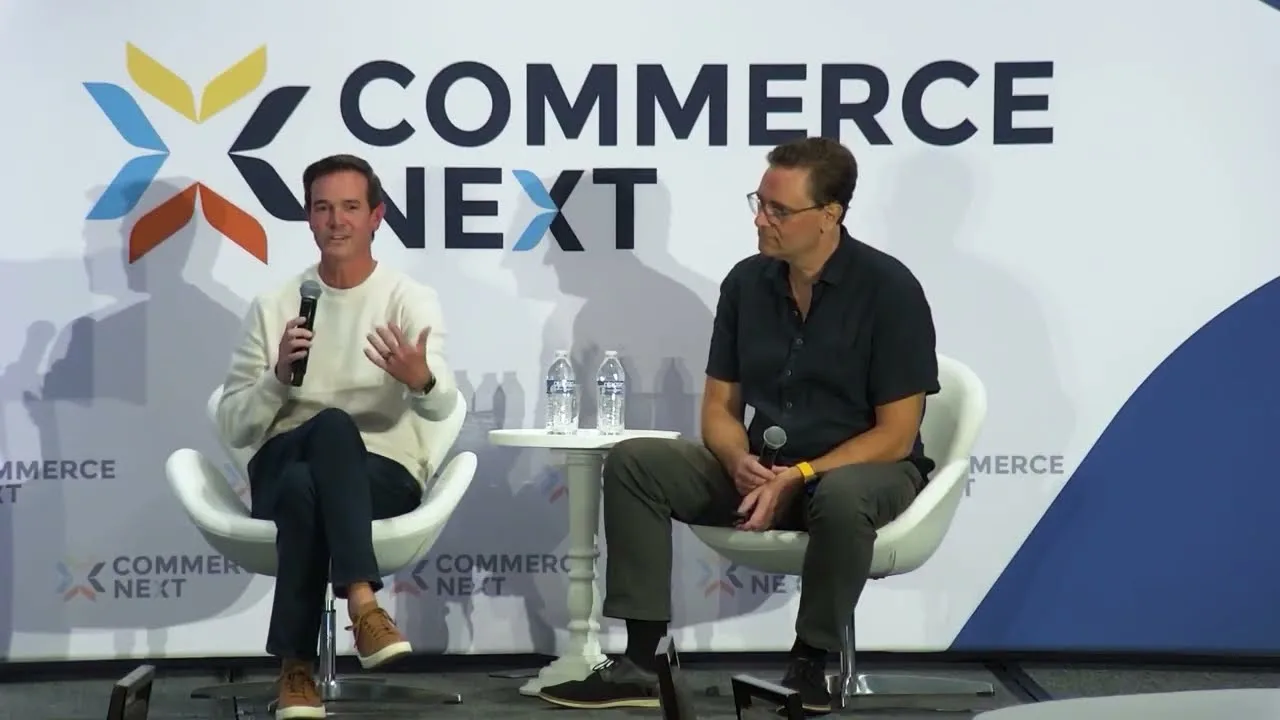
 Watch the full talkJeff Haddox on turning Pier 1's product pages into the front doorCommerceNext · Omni Retail Enterprises
Results
Pier 1: the numbers
Measured against a randomized control on live traffic:
- Revenue per session: +28.8% on mobile, +25.7% on desktop
- 414% ROI on the program
- +50.6% lift in EBIT for treated traffic — this is a business run for profitability, not vanity ROAS
- Annualized, the test projected to seven figures in incremental revenue
The model also started teaching the merchandising team things. A surprising example: “scent bridging.” Pier 1's team had been cross-selling fragrance by format — show candle buyers more candles. The AI found that shoppers are interested in the scent, not the format: a candle lover will take the same fragrance as a diffuser, room spray, or oil. Others followed: rattan shoppers click rattan across every category (texture beats taxonomy), and once an item enters the cart, discovery content should give way to complements and reassurance (the add-to-cart pivot). The Product Genius agent performs that recommendation on the fly, but the insight is now Pier 1 merchandising strategy, on-site and off.
It was really cool to see a hard, factual data point that says: here's how you should activate this category. Humans own brand, assortment, and strategy; the AI operates the storefront, with humans in the loop.
All reported metrics are derived from randomized A/B testing on live production traffic (pier1.com and dressbarn.com), segmented by device. Performance was validated using Bayesian analysis, confirming statistical significance — for example, a 96.9% probability of lift on Dressbarn mobile conversion.